
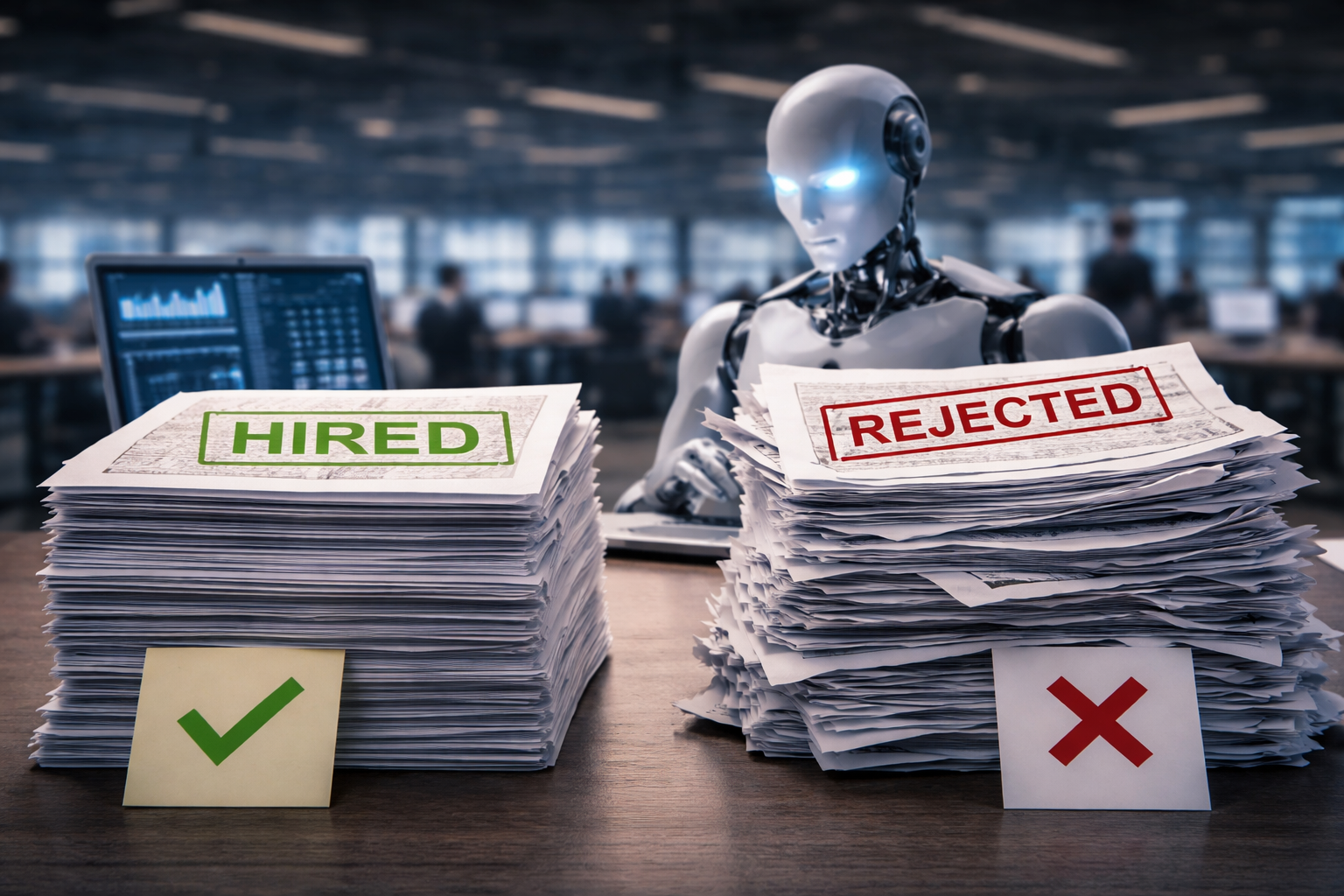
If you thought AI was a “future problem,” we have some news.
It’s not coming.
It’s here. And it’s already making decisions about who gets hired… and who doesn’t.
Let’s break it down.
Companies aren’t waiting anymore
Across industries — tech, finance, even crypto — companies are actively restructuring around AI.
Not experimenting. Not testing.
Restructuring.
That means:
-
fewer roles that can be automated
-
more investment in AI tools
-
smaller teams doing the same amount of work
Efficiency, but make it slightly terrifying.
Layoffs with a pattern
Recently, companies have started saying the quiet part out loud:
If a role doesn’t adapt to AI… it might not stick around.
We’re seeing:
-
workforce cuts tied to automation
-
teams being replaced or downsized
-
budgets shifting from salaries → AI infrastructure
And it’s happening across multiple industries at the same time.
Not a coincidence.
The job market is still “fine” (technically)
Here’s where it gets confusing.
On paper, the job market doesn’t look terrible:
-
unemployment isn’t exploding
-
companies aren’t collapsing
But at the same time:
-
hiring is slower
-
competition is higher
-
fewer entry-level opportunities exist
So yes, jobs exist.
They’re just harder to get — and easier to lose.
The AI shift is changing what “qualified” means
This is the real shift.
It’s not just about having experience anymore.
It’s about:
-
understanding how to use AI tools
-
working alongside automation
-
being more productive than the next person
Because if AI can do 50% of a job…
Companies start asking why they need as many people doing it.
The uncomfortable truth
AI isn’t replacing all jobs.
But it is:
-
reducing how many people are needed
-
raising the bar for who gets hired
-
changing what skills actually matter
Which creates a weird situation:
The job market still exists.
It just doesn’t work the way it used to.
So what does 2026 look like?
Not collapse.
Not boom.
Just… transition.
-
More AI
-
Fewer “traditional” roles
-
Higher expectations for everyone
And a growing gap between:
people who adapt → and people who don’t.
The takeaway
This isn’t a future trend.
It’s already happening.
Which means the question isn’t:
“Will AI affect jobs?”
It’s:
“How fast can you adapt before it affects yours?”